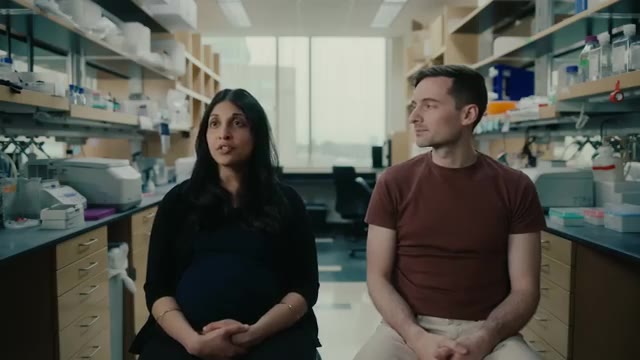

DeepMind’s roughly six-minute overview video, “Generating novel scientific hypotheses with Co-Scientist,” opens not with a product demo but with a confession from scientists: the firehose of new literature has long since outpaced the humans trying to drink from it. One researcher describes having “hundreds of Chrome tabs and papers open.” Another says the amount of knowledge needed to stay at the frontier of a field now doubles roughly every two months. The information, as the video puts it, arrives like ocean waves — and every researcher carries the quiet terror that something critical has already slipped past them.
Against that backdrop, DeepMind introduces Co-Scientist: not a chatbot, not a literature search tool, but what the team describes as “an engine for the discovery of new insights into the world that we live in.”
Why now? The scale problem in science
The video grounds Co-Scientist’s motivation in a single sobering statistic: there are around 17,080 known rare diseases, and only about 5% have any treatment. Biology is slow. Wet-lab experiments fail hundreds or thousands of times. A scientist may only get “a few shots on goal” in an entire career to answer the question they truly care about.
If AI can compress the hypothesis generation step — the search across literature, the synthesis of disparate fields, the ranking of which idea is most worth testing — those shots on goal become dramatically more valuable.
Not just a language model — a research team
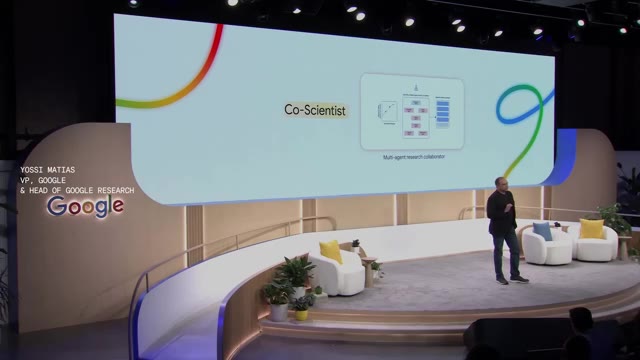
The most important framing in the video is this: Co-Scientist is a multi-agent system, deliberately built to mimic the structure of a real research group rather than to mimic a single brilliant individual.
The agents play specialized roles:
- Literature agents take the scientist’s stated goal and scour the published literature.
- Generator agents propose hypotheses and creative new ideas.
- Evolution agents mutate and recombine those hypotheses, refining them over many cycles.
- Ranking / comparison agents stage tournaments between ideas, deciding which deserve more compute and attention.
- Extraction agents harvest new information that emerges during the debate between ideas — knowledge that didn’t exist before the agents started arguing.
The system is described as running not for seconds or minutes but for days, sometimes weeks, testing thousands of hypotheses and reading tens of thousands of papers. The parallelism is the point: a single prompt can, in the words of one interviewee, “deploy 50 scientists in one day.”
A recurring theme is that the system’s real superpower is cross-field synthesis — connecting facts from previously separate disciplines into a creative breakthrough that no single domain expert was positioned to see.
What it feels like to use
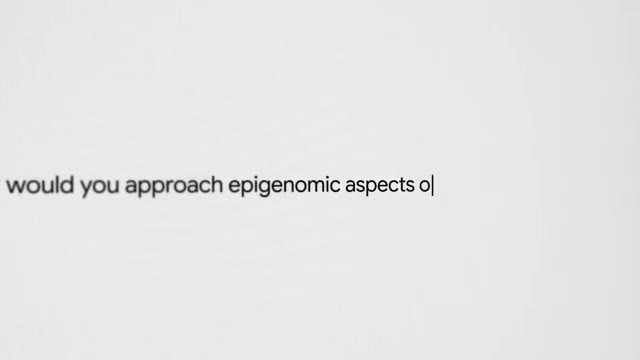
The most memorable beat in the video is a researcher describing their conversion from skeptic to evangelist. They handed Co-Scientist a prompt about the epigenomic aspects of liver fibrosis and possible drug interventions. When the output came back:
“I kind of fell off my chair.”
Another scientist describes scanning the hypotheses and realizing the system had surfaced a protein they had simply never considered. The ideas weren’t just plentiful — they had individual rigor, and the team “couldn’t find any way to disprove” the most interesting ones. The natural next reaction, repeated by multiple interviewees, was the same: “I just want to run to the lab and try this.”
The productivity claim is concrete: workstreams that would have taken months of background research compress to “a day or two,” with outputs that “could save you years.”
And critically, the video notes that hypotheses from Co-Scientist have already led to new published findings, with more papers in the pipeline. This is not a prototype reel — it is a tool that is producing citable science.
From moonshots to mission, from code to clinic

The video closes with a framing that’s worth holding onto. The DeepMind team frames the trajectory of AI for science as moving “from moonshots to mission” and “from code to clinic.” The goal is not to replace scientists but to amplify them — the closing line is that “the best scientists paired with these kinds of tools will be able to do incredible things.”
Takeaways for builders
For anyone working on agent systems outside biology, Co-Scientist is a useful reference architecture:
- Specialization beats generalization. Distinct generator, ranker, evolver, and extractor agents outperform a single monolithic prompt.
- Long-horizon compute matters. Running for days, not seconds, is part of the product. The value is in sustained exploration.
- Tournaments produce quality. Pairwise ranking between candidate ideas mirrors how human review committees actually work.
- Cross-domain retrieval is the alpha. The breakthroughs come from connecting fields that human specialists rarely read in parallel.
- Keep the human in the loop. Co-Scientist hands back hypotheses — the scientist still chooses what to take into the lab.
It’s a short video, but the thesis is large: if hypothesis generation stops being the bottleneck, the pace of science itself shifts. As one of the interviewees puts it, almost as an apology: “I’m uncontainable in my excitement. It’s driving my lab crazy.”
Source: DeepMind — Generating novel scientific hypotheses with Co-Scientist