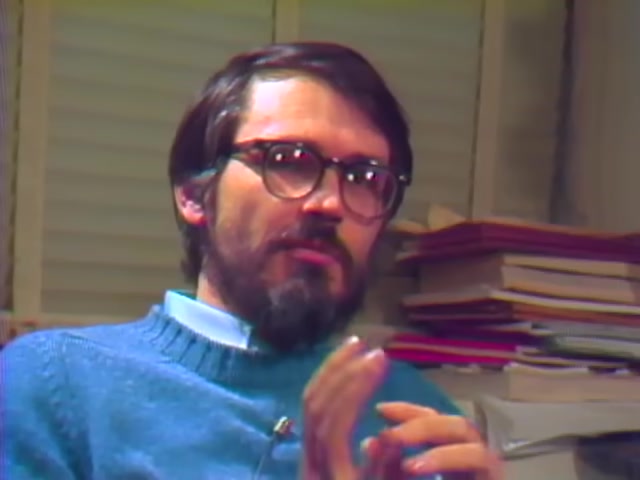
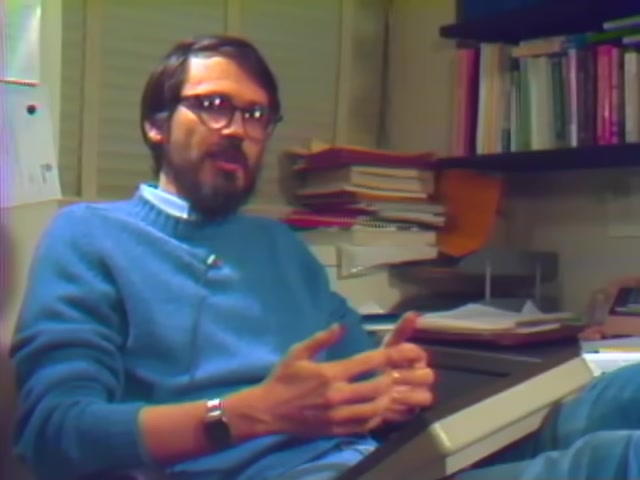
Every so often the seminal-talk slot lands on something older than every framework it critiques. This one runs a full 27 minutes and it is not a re-enactment: it is the actual 1982 Bell Labs promotional film, with Brian Kernighan, Dennis Ritchie, Ken Thompson, Alfred Aho, Stu Feldman, and Lorinda Cherry on camera explaining, in their own voices, why the system they built looks the way it does. The AT&T Archives channel has now cleared it for wide release, so the classic-of-the-week pick this week writes itself.
If you have ever piped grep | sort | uniq -c | sort -rn without thinking about it, this is the film that shows you the exact moment that idea was consciously being sold to the rest of AT&T. Watch it whole. The rest of this article is a synthesizing map of what’s inside.
The framing: software as the harder half
The film opens not with a demo but with a lament. Large projects “get done poorly, take a long time, consume an astonishing amount of money,” and “the individual team members are dissatisfied.” At Bell Labs in 1982, roughly 50 % of employees were producing software, and there was still a “crying need” that nobody could keep up with. Software is different from hardware, Kernighan notes — nobody demands their radio become a television, but users demand exactly that shape-shift from every program they touch.
The Unix pitch, therefore, is not “here is a faster kernel.” It is “here is a programming environment that makes life easier for everyone on a large programming project.” That framing — OS-as-developer-experience — is what makes the film feel modern.
Kernighan explicitly invokes The Mythical Man-Month — Fred Brooks’s estimate of 5,000 person-years to build OS/360 — as the anti-pattern. Unix’s answer was fewer, smaller pieces.
The philosophy: few primitives, composed
Ken Thompson and Dennis Ritchie appear together in the middle third of the film to explain the design principle in one line each. “A Unix system is built out of very few primitives,” Thompson says. Everything else is layered on top by combination.
The three primitives the film keeps returning to:
- A hierarchical file system where a file is “just a sequence of bytes” and location is not “germane to your program.”
- Programs as files — the commands you type are literally names of executables in the file system, indistinguishable from data files. New commands are added the same way you save a document.
- The shell — a language for combining programs, not just a command prompt.
The killer demo: the pipe
The heart of the film is a live spelling-check walkthrough. Kernighan sits at a terminal and builds a spell-checker out of programs that already exist, none of which were written to check spelling.
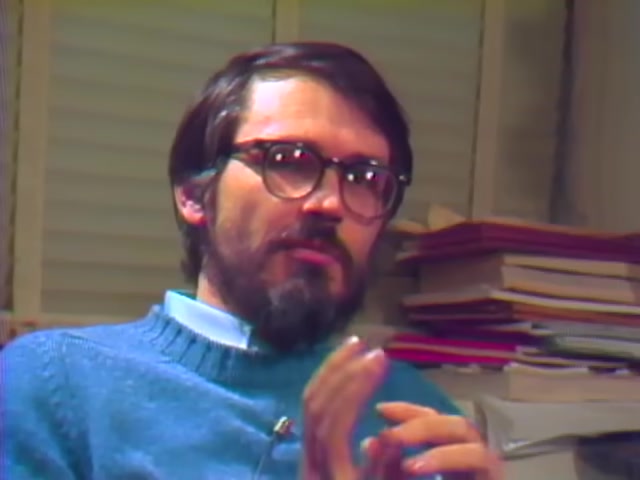
The sequence he types is roughly:
tr -cs A-Za-z '\n' < document | sort | uniq | comm -23 - dictionary
Break the document into one-word-per-line, sort, deduplicate, and compare against a dictionary word-list. Every stage is a general-purpose tool. The pipe (|) is what makes them composable. “The ability to pipeline the output of one program into the input of another,” Kernighan says on camera, is the single feature that distinguishes Unix from the systems around it in 1982.
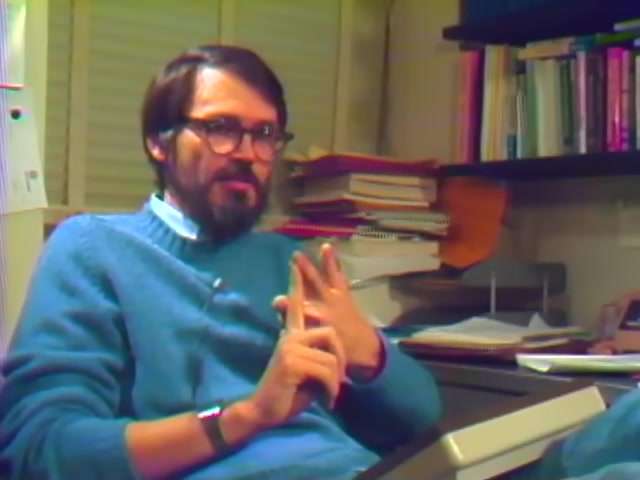
The point he lingers on: he did not have to modify a single existing program. He wrote zero lines of C. The spell-checker is a shell procedure — a saved pipeline. Store it in a file, make it executable, and it is now a command indistinguishable from ls or cat. That is the moment the “everything is a file, programs are files, the shell is a language” story pays off in one motion.
Redirection, environments, and portability
The middle sections walk through what the film calls the “extended shell language”:
<and>for redirection — decided not by each program but by the shell itself, so every program gets it for free.- Shell procedures — parameterized, callable, indistinguishable from compiled binaries.
- The system as a small kernel plus a large userland of independently-authored tools.
Portability is the other unlock the film sells. By 1982 Unix had already been moved to “many many different machines,” from the PDP-11 the film mostly shows to Interdata, Honeywell, Amdahl, and Intel-based hardware. The reason: the kernel was small, written in C, and the userland ecosystem came along for the ride.
troff and the second-order effect
The final act pivots from software development to document preparation. Lorinda Cherry demonstrates eqn piped into troff producing typeset mathematical equations — the exact toolchain used to typeset the papers, memos, and eventually the O’Reilly books that would document Unix itself.
The demo is not about typesetting per se. It is the film’s proof that the pipe abstraction was not a shell-only trick — the same composition model extended to text preparation, mail, data analysis, and (in a scene near the end) a factory automation shop floor. One primitive, many domains.
Why it still matters in 2026
Watching this in 2026, the temptation is to file it under “nostalgia.” Resist that. Two things the film gets right that the AI-tooling discourse is still relearning:
- Small, composable, text-in-text-out programs win. Every “let the agent call tools” architecture in production today is a rediscovery of
program | program | program. The LLM is the shell. - The environment is the product. Bell Labs did not sell Unix on kernel benchmarks. They sold it on the developer experience of assembling programs from parts. Every successful developer tool since — from Emacs to Docker to Claude Code — has had to make the same pitch.
Key takeaways
- Unix was pitched as a programming environment, not a kernel. The 1982 marketing message is DX, not perf.
- Fewer primitives, more combinations: hierarchical files, programs-as-files, and a shell-as-language are the entire foundation.
- The pipe is the composition operator. The film’s spelling-checker demo is still the cleanest one-take argument for why.
- Shell procedures collapse the gap between using a tool and writing one — the origin story of the “everything is a script” culture.
- Redirection lives in the shell, not each program, so every tool gets it for free. This is where “orthogonality” as a systems value enters the vocabulary.
- Portability came from a small C kernel plus a large userland, not from a compatibility layer. This is why Unix ate the industry.
- The same abstraction — pipes and files — extended to typesetting, mail, factory control. One good primitive travels.
- Every modern agent tool-calling framework is re-implementing this. If you are designing one, watch this film first.
Source
- Title: AT&T Archives: The UNIX Operating System
- Speakers on camera: Brian Kernighan, Dennis Ritchie, Ken Thompson, Alfred Aho, Stu Feldman, Lorinda Cherry
- Original production: Bell Laboratories, 1982
- Channel: AT&T Tech Channel
- Duration: 27:26
- Views at pickup: 2.2 M
- URL: https://www.youtube.com/watch?v=tc4ROCJYbm0