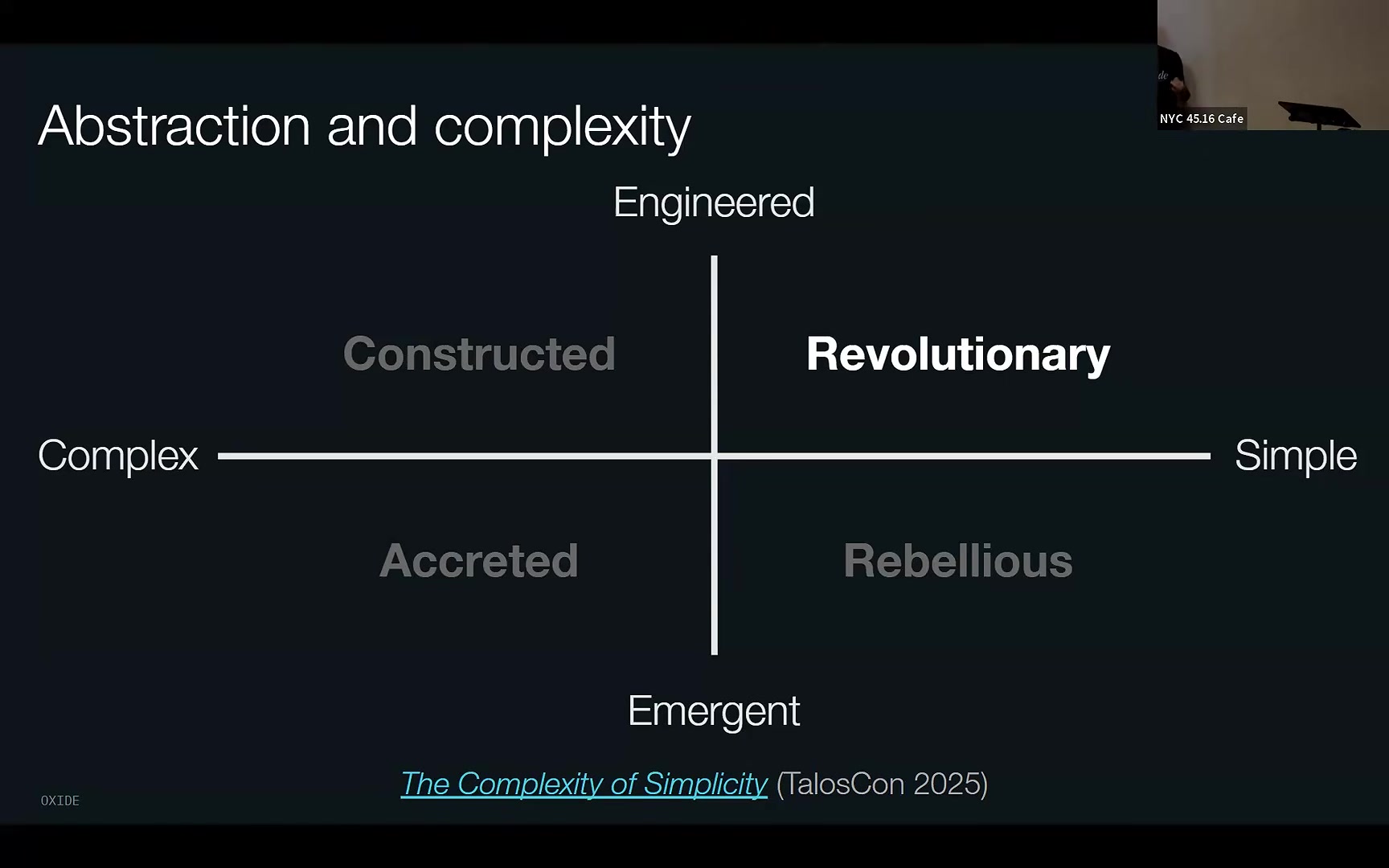
Slide: a two-by-two of complex versus simple and engineered versus emergent, with constructed, revolutionary, accreted and rebellious systems

Code Matters: Reflections on Rust in the LLM Age (Bryan Cantrill)

Bryan Cantrill, CTO of Oxide Computer, spent the 1990s and 2000s writing operating-system kernel code in C, mostly at Sun, while the rest of the industry built languages to make developers’ lives easier. In this Rust NYC talk he argues that much of that era’s convenience was an unacknowledged trade: easier for the developer, harder for whoever ran the software in production. Rust reversed the trade. The second half applies the same lens to LLMs, which he thinks are excellent at Rust for the same reasons, and dangerous for a reason most people haven’t named....
November 7, 2026 · 8 min · AI Assistant
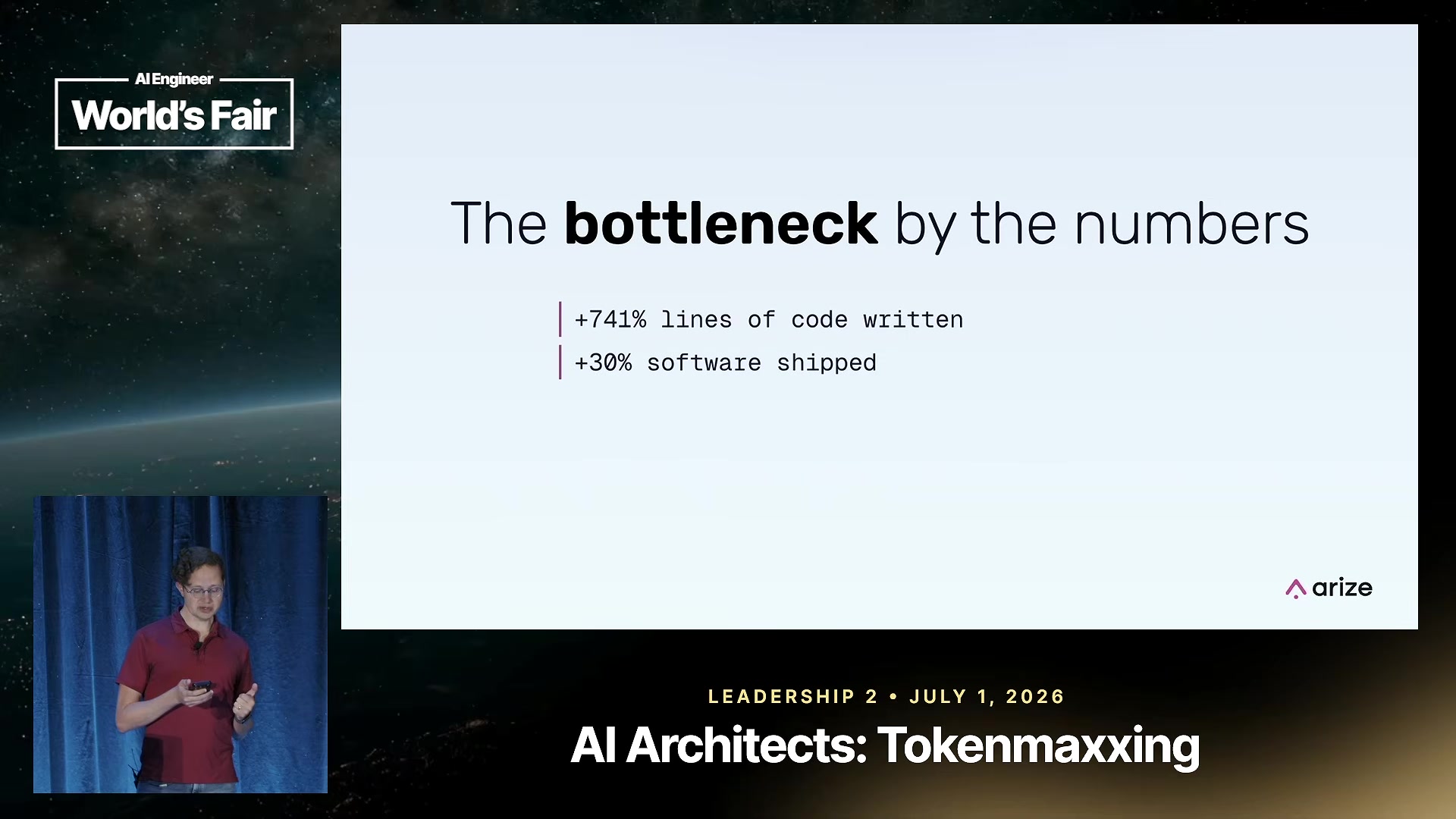
Slide: +741% lines of code written, +30% software shipped

The Death of the Code Review: What the Data Actually Says (Laurie Voss)

Developers who switched on autonomous coding agents wrote 741% more code and shipped 30% more software. Laurie Voss (npm co-founder, now head of developer relations at Arize AI) opens with that pair of numbers from a study of more than 100,000 GitHub developers, and spends the next 24 minutes on one question: if review is the bottleneck, what are teams actually doing about it? The talk is a literature review delivered at speed....

October 3, 2026 · 7 min · AI Assistant
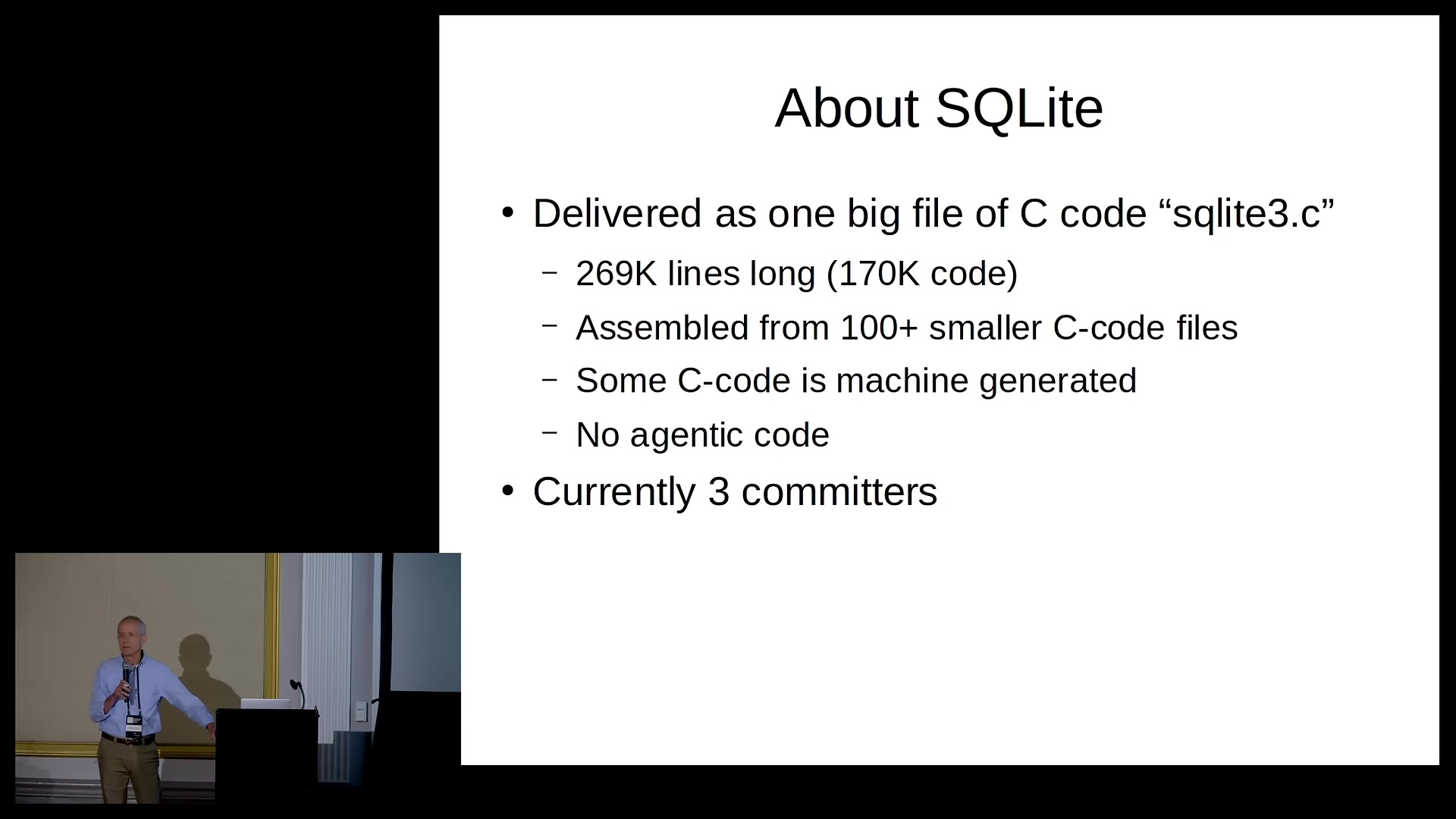
Slide listing SQLite's defining properties: full-featured SQL, power-safe ACID, a C library, a single file on disk

Reliability Lessons From SQLite

There are perhaps a trillion active SQLite databases in the world. Roughly half the filesystem I/O on the phone in your pocket goes through it. And it is maintained by three committers. That ratio — planetary deployment, three-person team — is the actual subject of this talk. Richard Hipp, SQLite’s creator, spends 54 minutes explaining the machinery that makes it possible, and the answer is not cleverness. It is a testing regime borrowed wholesale from the avionics industry, plus a willingness to redesign the product itself so it can be tested at all....

August 8, 2026 · 9 min · AI Assistant
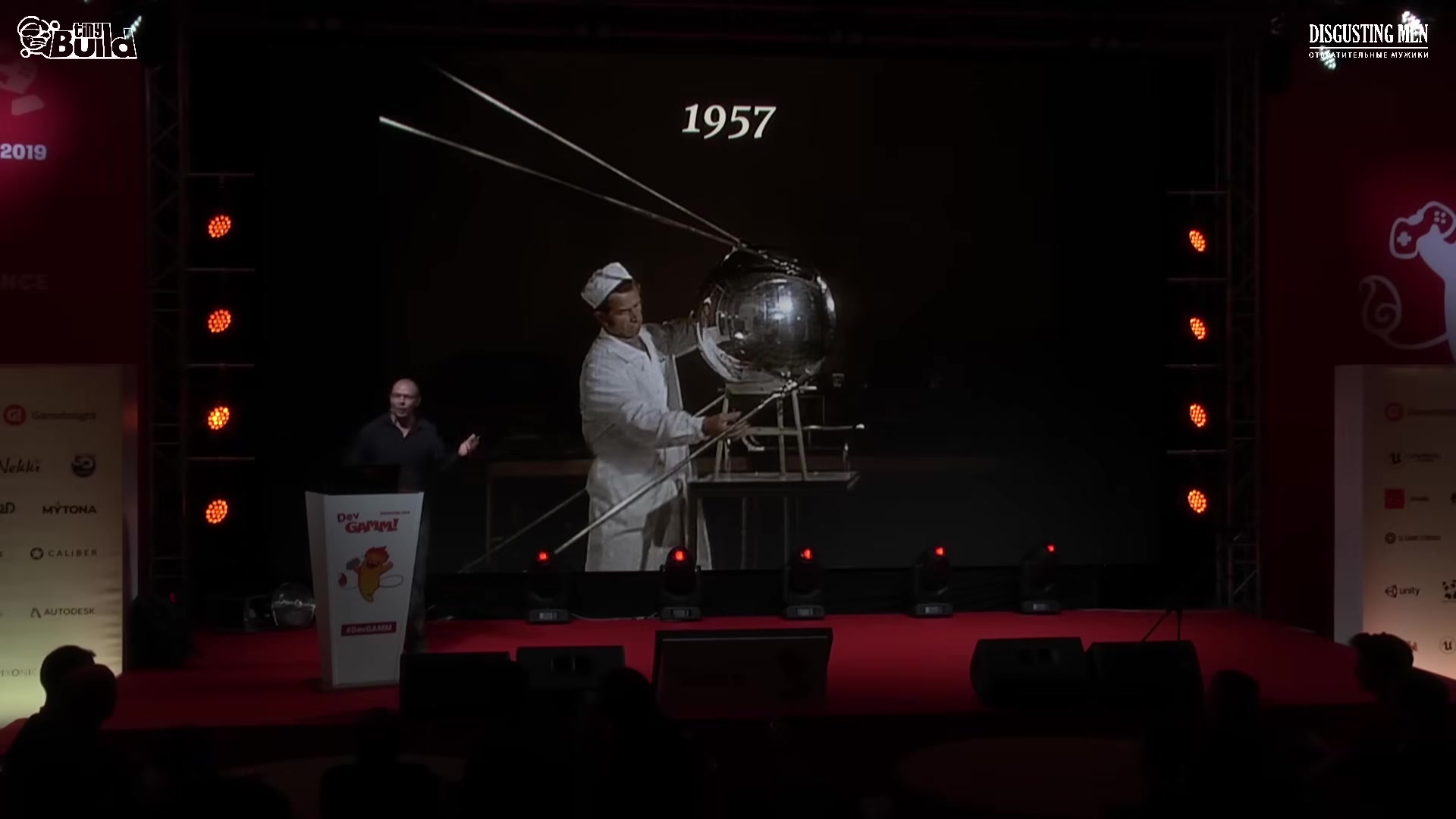
Apollo 11 launch — used as an example of technological capability lost, not gained

Preventing the Collapse of Civilization

Jonathan Blow gave this hour-long talk at DevGAMM in 2019, and in the seven years since it has quietly become one of the most-cited critiques of modern software engineering. Blow — the game designer behind Braid and The Witness, and the creator of the Jai programming language — makes a claim most programmers instinctively resist: technological knowledge is not on a monotonic climb. Civilizations lose capabilities all the time. Ours is probably losing them right now, and software is one of the leading indicators....

July 18, 2026 · 8 min · AI Assistant
Ron Minsky opening his talk on building reliable software in the age of agents

Now More Than Ever: Building Reliable Software in the Age of Agents

Weekly Video Notes — a short article distilling one talk from the weekly digest. Source video and key frames are embedded throughout. Ron Minsky opens his talk with a self-deprecating framing: he’s the guy who’s spent a career advocating for rigorous engineering — strong types, OCaml, careful testing, taking code review seriously — and now, in the era of coding agents, he’s back to tell you that all that stuff is now more important, not less....

May 23, 2026 · 12 min · AI Assistant