Weekly Video Notes — a short article distilling one talk from the weekly digest. Source video and key frames embedded throughout.
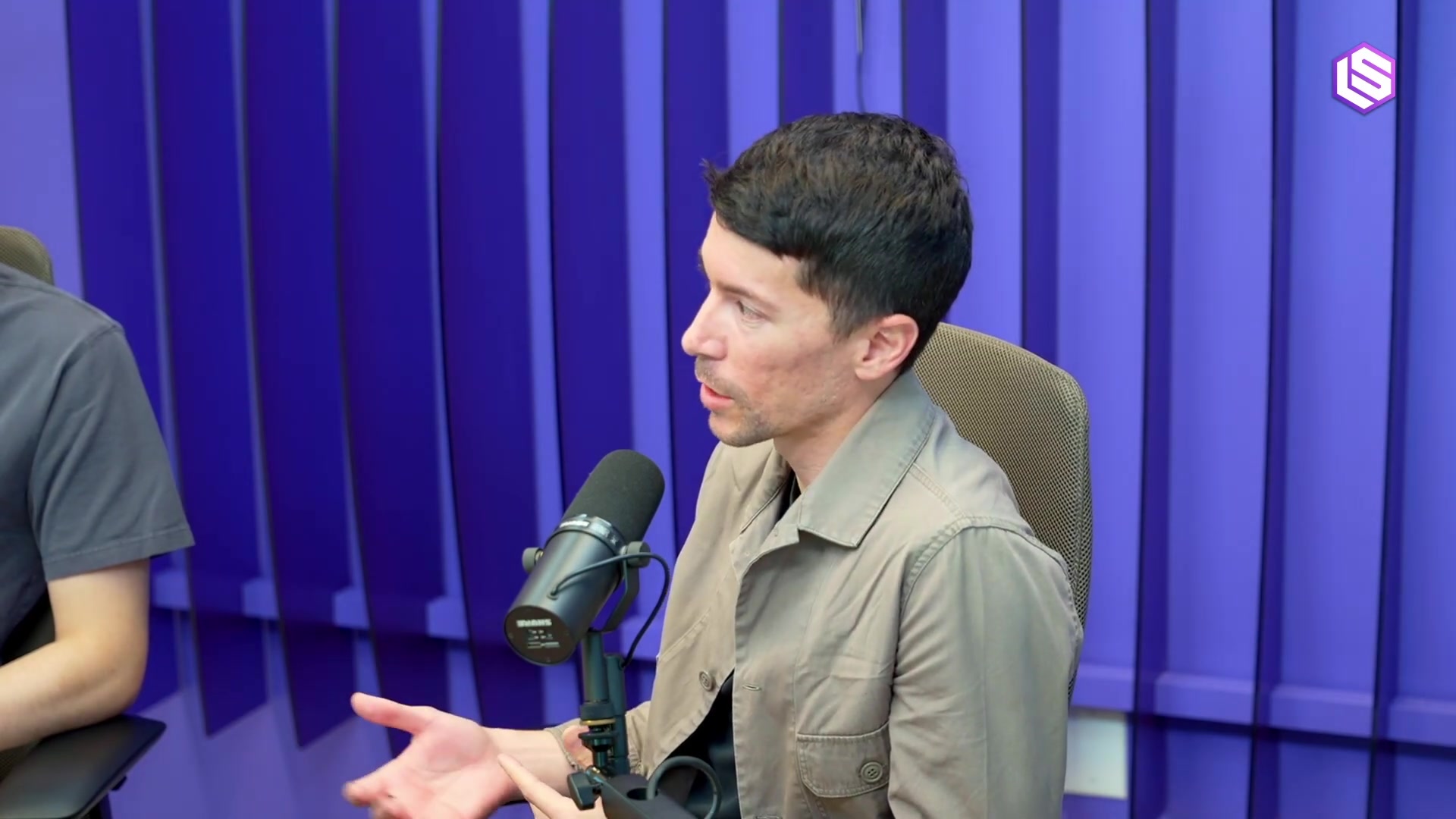
In this 1h10m Latent Space conversation, Cognition CTO Walden Yan and engineer Cole Murray walk through what they’re calling Devin’s “80% moment” — the point at which an autonomous coding agent can land production-grade PRs on real codebases at a rate that changes how teams work. Cognition is reporting a 7× increase in merged PRs for teams that adopt their background-agent workflow, and the conversation digs into why hand-held in-IDE coding is no longer the frontier.
Why background agents are the unlock

The interesting thing isn’t that Devin can write code — every coding agent can write code now. The unlock is that Devin can work asynchronously, on long-running tasks, without a human babysitting the loop. Cognition’s framing: the bottleneck has shifted from “can the agent produce a good diff?” to “can the agent reproduce the dev environment, exercise the change, and prove it works — all without human help?”
If you wanted to do arbitrary testing — imagine you make a change that spans the front end and the back end — you have to reason through how to first run these applications, orchestrate them with the right version of the code, then trigger the feature to actually happen. That is where we spend most of our time.
Dev environments are the real moat

A recurring theme: the agent’s productivity is bounded by how cleanly it can spin up a working dev environment. Cognition argues that any environment that’s a good developer experience naturally makes a good agent experience — once you’ve nailed local setup with make dev or a one-command bootstrap, the agent inherits the same ergonomic. Conversely, “works on my machine” pain is now an agent-velocity problem, not just a human onboarding problem.
The team has been experimenting with various lightweight containerization approaches (the “Docker Light” class of tools), and Cole’s view is that the right answer is whatever makes the local loop fast — the agent will follow.
Memory and feedback loops
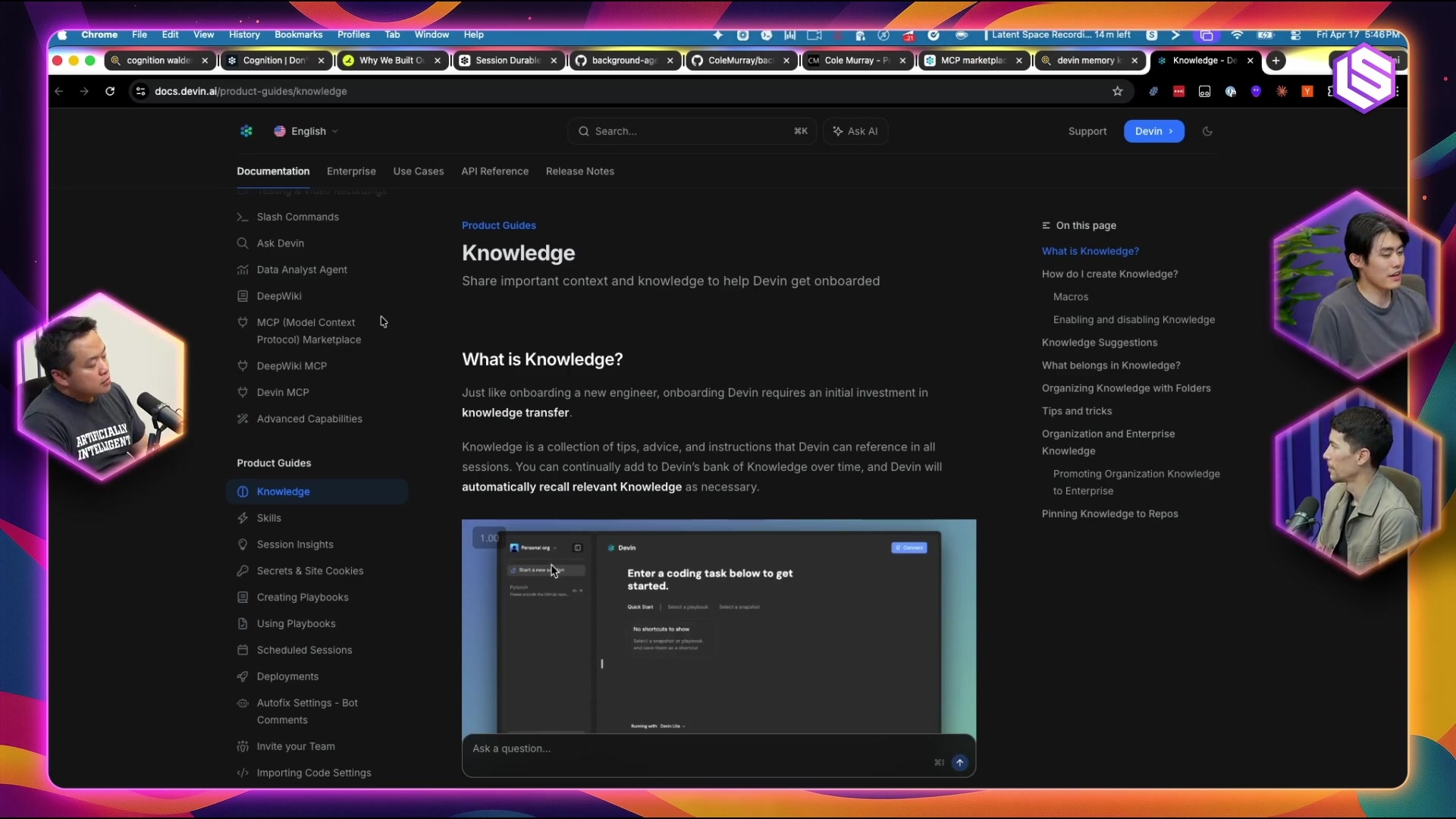
One of the most interesting feature wishes from the conversation: automatic memory updates on PR rejection. Today, if you reject a Devin PR, you have to go re-edit your scheduled sync configuration or instruction file yourself. Walden notes this is on the near-term roadmap — the agent should be learning from its own rejected work, not waiting for the human to teach it again.
This is the meta-pattern of agentic systems right now: every friction point in the human↔agent loop is a candidate for the agent to absorb.
Python’s accidental dominance

Toward the end, the conversation turns to language choice. Despite Cognition writing significant infrastructure in Go and TypeScript, the agent and observability ecosystem is overwhelmingly Python-first. For greenfield apps in the agent space, you fight gravity if you start anywhere else — the libraries, the SDKs, the eval frameworks, the tracing tools, all assume Python.
Key takeaways
- Background agents are the inflection. Synchronous chat-with-an-agent is yesterday; long-running asynchronous PR production is today.
- 7× PR throughput is the headline metric Cognition is reporting for teams that adopt the workflow.
- Dev-environment reproducibility is the real moat. A good DX for humans is a good DX for agents.
- Memory should learn from rejections — the human shouldn’t have to re-edit instructions every time.
- Python dominates the agent stack, especially observability. Choose accordingly for greenfield work.
- The bottleneck moved up the stack — from code generation to orchestration, testing, and reproducing real environments.
Source
- Title: Devin’s 80% Moment: Background Agents, 7x PRs, & End of Hand-Held Coding
- Speakers: Walden Yan (CTO, Cognition) and Cole Murray
- Show: Latent Space podcast
- Duration: 1:09:33
- Published: 2026-05-28
- URL: https://www.youtube.com/watch?v=0fgJPhYcbVk