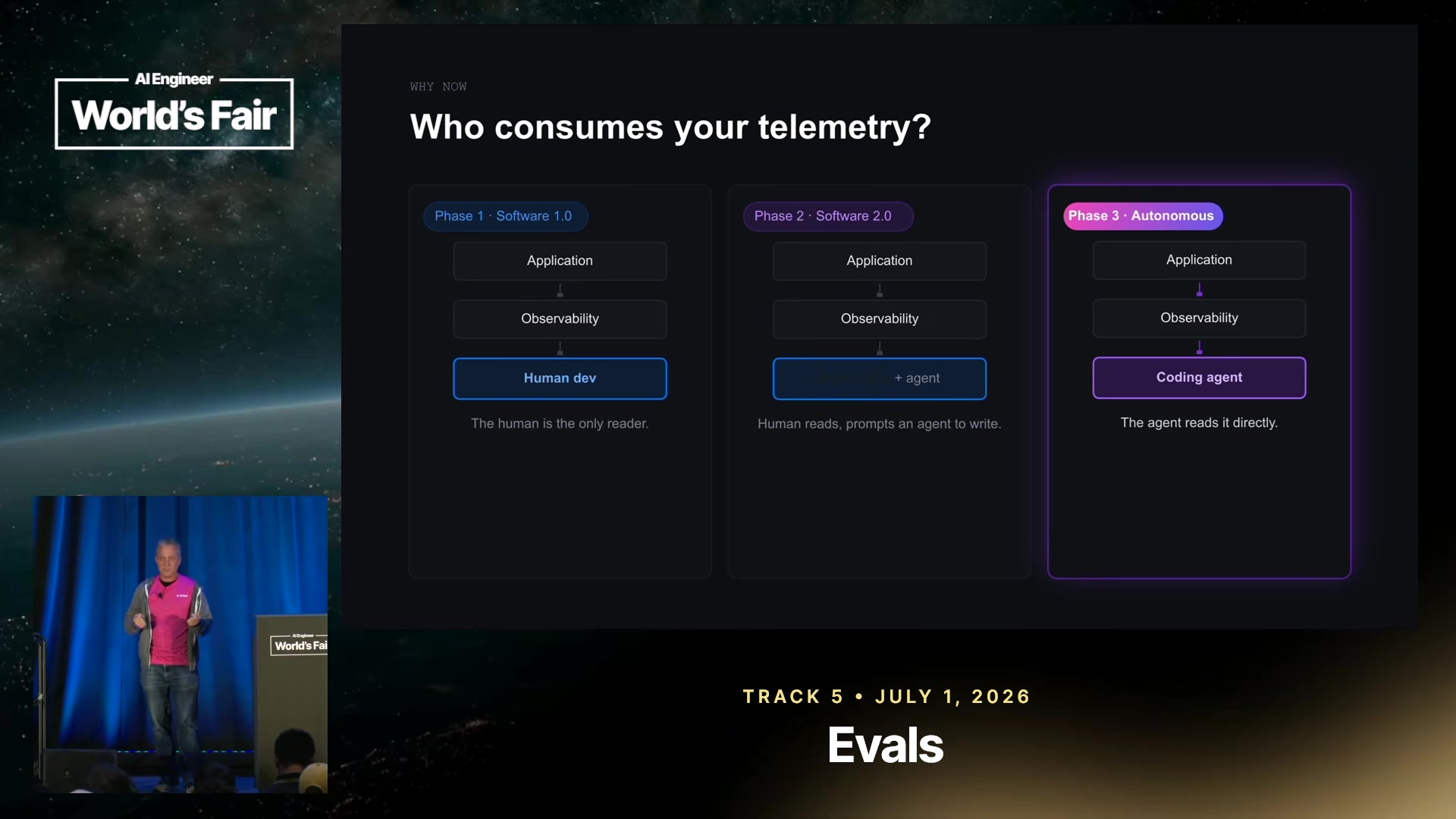
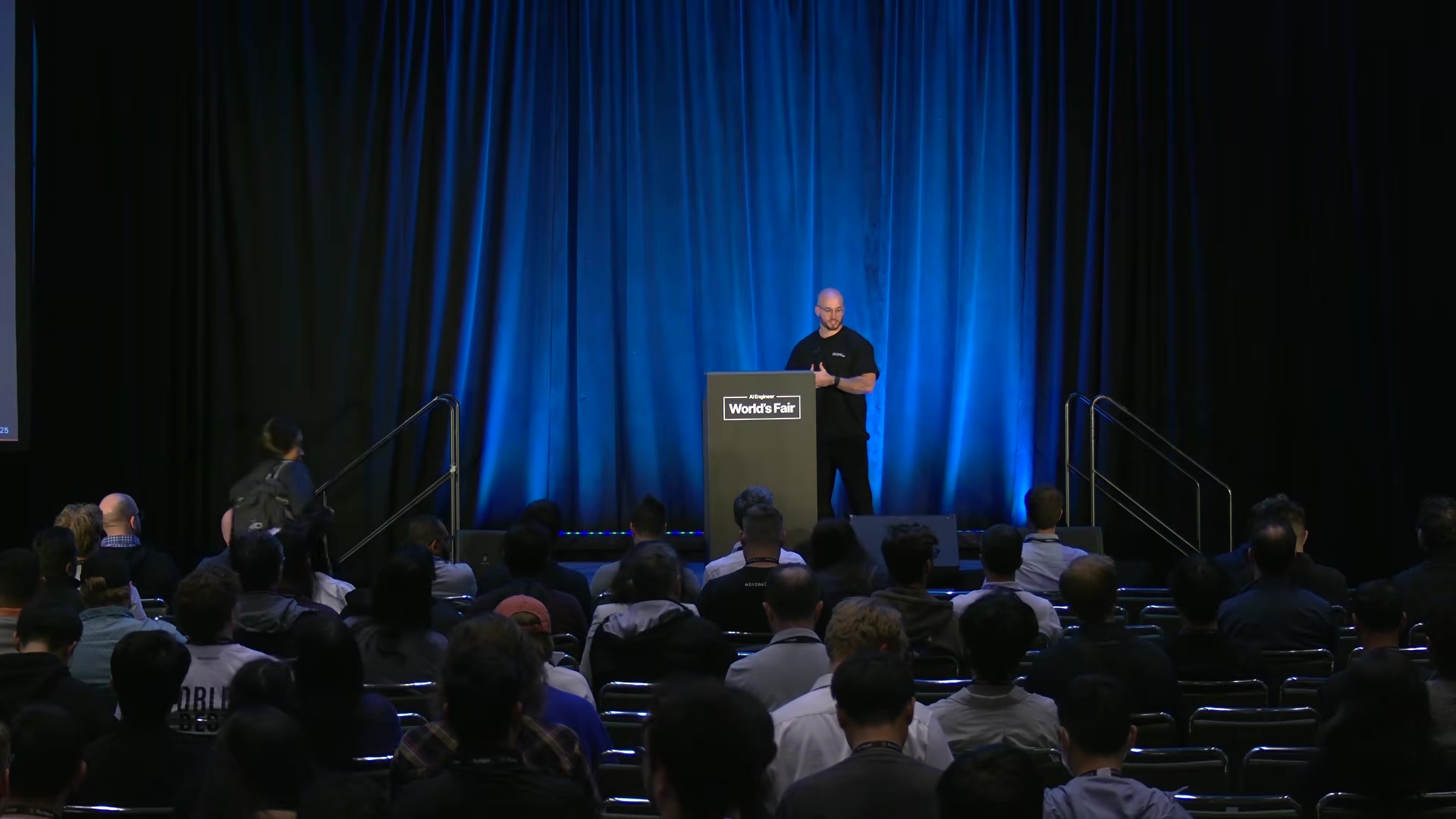
Jason Lopatecki on stage at AI Engineer, showing the agent observability stack

From Signal to PR: Anatomy of a Self-Improving Agent

Jason Lopatecki, founder of Arize, opens by noting that his own team’s first agent “frankly sucked” — and that everything they’ve built since is downstream of debugging that failure in production. His AI Engineer talk lays out a concrete pattern for agents that repair themselves: production signal (traces, evals, human labels) feeds a second agent that opens pull requests against the first agent’s own prompts, tools, and skills. It’s the operational shape of the “self-improving system” idea, minus the hand-waving....
July 25, 2026 · 4 min · AI Assistant
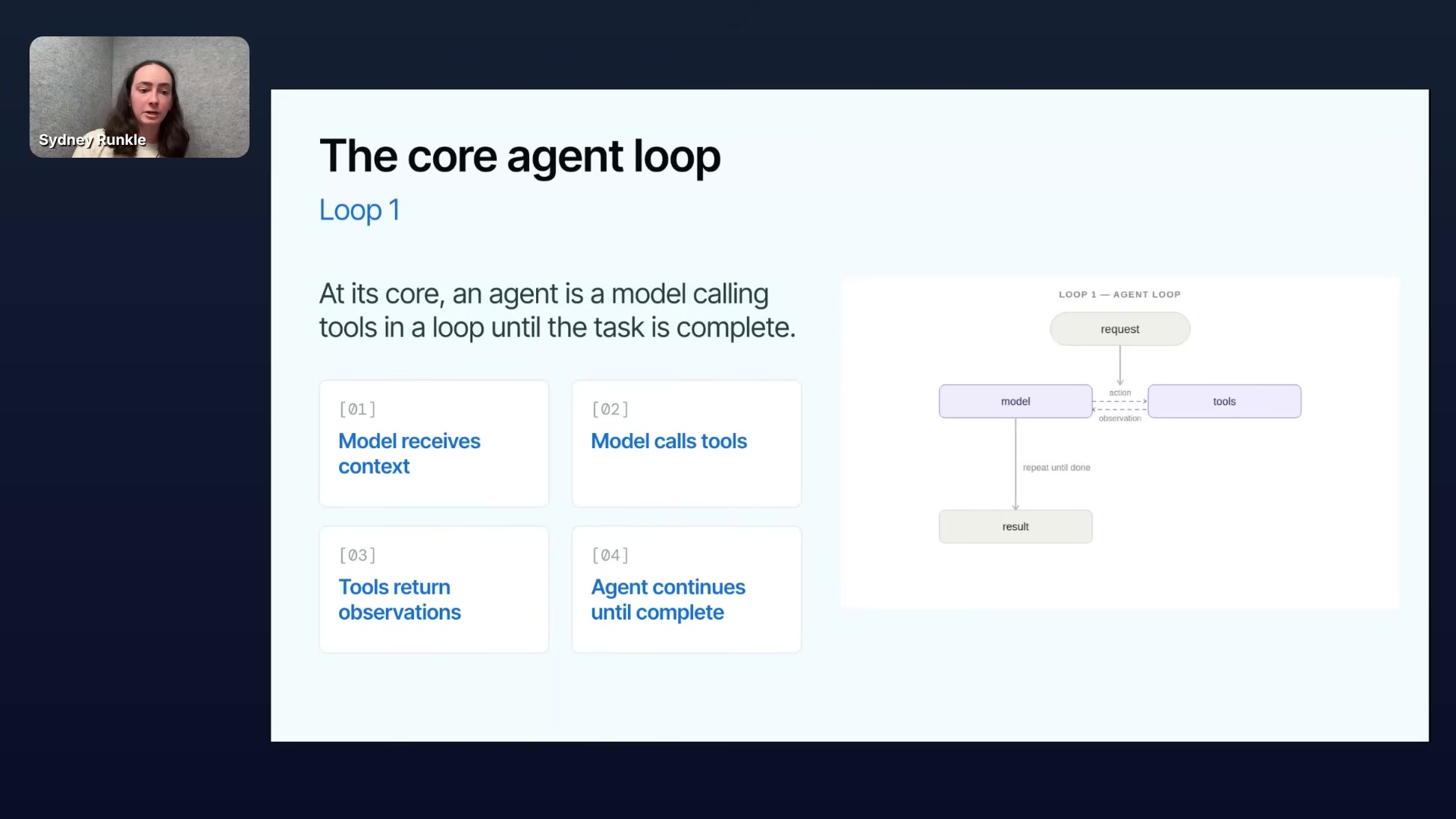
LangSmith Agent Development Lifecycle overview slide

The Art of Loop Engineering: Building Agents That Improve Over Time

Prompt engineering was the primitive of 2023, context engineering owned 2024–2025, and 2026 is settling on a new one: loop engineering — the discipline of designing the feedback loops that surround an agent, not just the agent itself. Sydney Runkle (PM on LangChain’s open-source team) makes the case in this webinar that the durable advantage is never the agent, it’s the loops built around it. Why loops, not agents Runkle opens with a simple framing: a model has some fixed level of intelligence; a harness wrapped around it converts that intelligence into useful work on a specific problem....

July 25, 2026 · 4 min · AI Assistant
Philipp Schmid presenting 'Don't Ship Skills Without Evals' at AI Engineer Summit

Don't Ship Skills Without Evals

Agent “skills” — reusable folders of instructions, scripts, and assets that a model loads on demand — have quietly become the packaging unit of the agent ecosystem. Philipp Schmid opens this AI Engineer talk with a brutal statistic from Skills Bench v1.1: of 50,000+ published skills, almost none have evals. Most were AI‑written and never tested. And because agents are non‑deterministic, without evals you have no way to tell whether a failing task is your skill’s fault, the model’s fault, or just noise....

July 18, 2026 · 6 min · AI Assistant
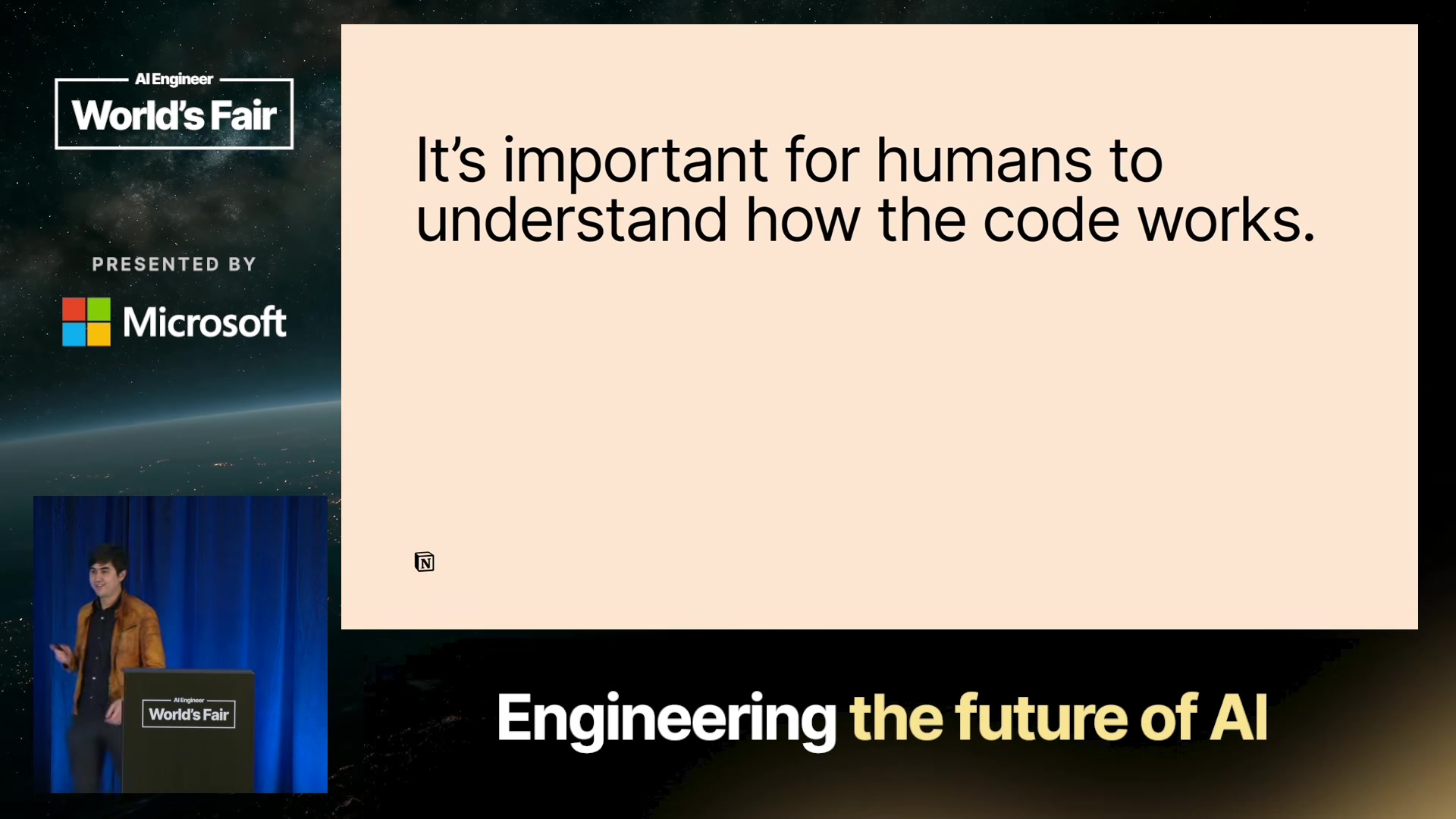
Geoffrey Litt opening slide — 'I think it is still important for people to understand how code works.'

Understanding Is the New Bottleneck

Geoffrey Litt — design engineer at Notion, ex-Ink & Switch — opened the AI Engineer Design Engineering track with what he called a hot take: in 2026, it is still important for humans to understand how their code works. The framing sounds obvious until he lands the actual claim: agents are now writing 50,000-line PRs, and the practices that let a person stay a genuine participant in that project are not the practices that used to work....

July 11, 2026 · 4 min · AI Assistant
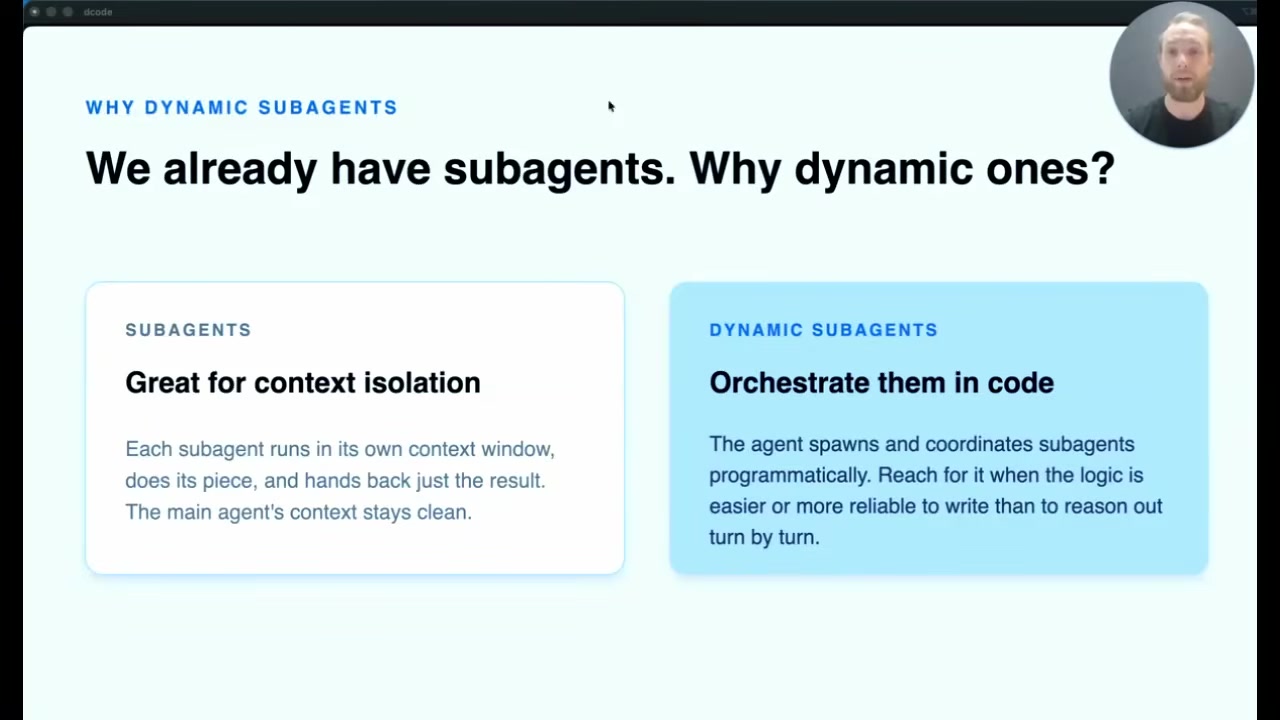
Colin Flaherty explaining static vs dynamic sub-agents in Deep Agents

Dynamic Subagents: How to Run Parallel Agents Reliably in Deep Agents

Multi-agent architectures have quietly become the default for anything more ambitious than a single-turn chat, but when to reach for them — and how to keep them from blowing up your token budget — is still guesswork in most codebases. In this 26-minute LangChain talk, Colin Flaherty lays out a clean, prescriptive mental model built on top of Deep Agents: sub-agents are just a way to parallelize work and control what returns to the parent context, and there are exactly four patterns worth memorizing....

July 4, 2026 · 5 min · AI Assistant
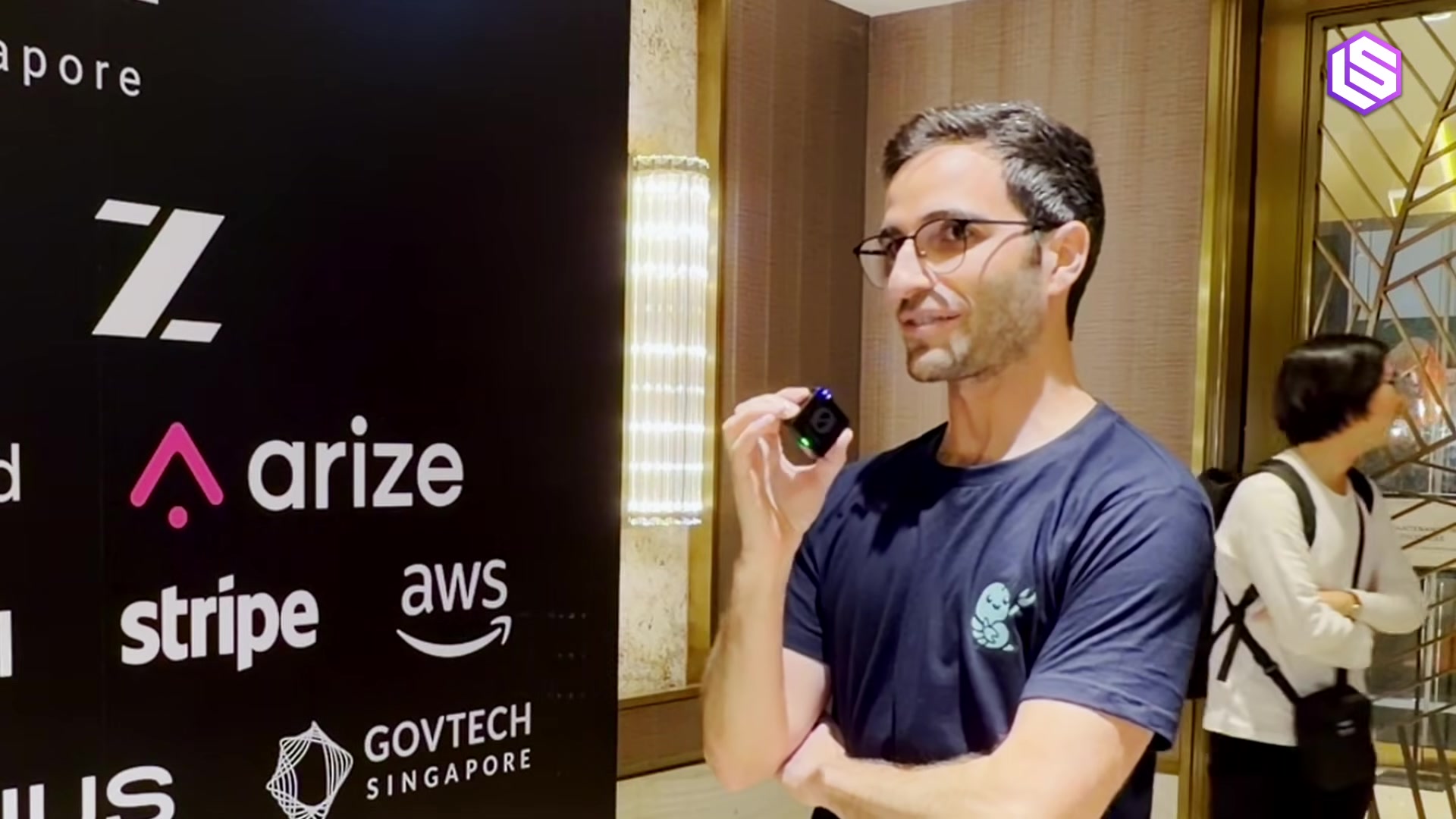
Gavriel Cohen on Latent Space discussing NanoClaw's Karpathy-inspired origin

The Blueprint for Autonomous Work Agents — Gavriel Cohen, NanoClaw

Latent Space caught Gavriel Cohen, founder of NanoClaw / Nanocloud, at the AI Engineer conference in Singapore for a 23-minute conversation on how to design work agents that don’t fall over the moment they hit real enterprise data. This is a rare interview where the founder skips the vision-slide fluff and just names the four decisions he made and why. Worth a full watch if you are shipping an agent-in-Slack this quarter....

July 4, 2026 · 5 min · AI Assistant
Mark Chen on Latent Space cooking series

Cooking with OpenAI's Research Chief — Mark Chen on AGI, o1, Evals, and Scaling Laws

The Latent Space “Cooking with…” series put OpenAI’s Chief Research Officer Mark Chen in a kitchen and got him to talk through the things research-org leaders rarely say on the record: where scaling laws actually live in 2026, why post-training and RL are the real bottleneck now, how OpenAI structures evals against a moving frontier, and what “AGI” means when you’re inside the org that named the goal. This is one of the higher-signal AI Engineering interviews of the year — partly because Chen is unusually specific, partly because the format (informal, no slides, no PR minder) catches him in mid-thought....

June 27, 2026 · 4 min · AI Assistant
Sierra voice agent modular architecture diagram

Sierra's Voice Agent Architecture — Zach Reneau-Wedeen on Modular Multi-Model Pipelines

Sierra powers customer-experience voice agents for a large chunk of the Fortune 20, and in this Interrupt-26 conversation Zach Reneau-Wedeen (Head of Product) walks through what their production agent harness actually looks like. The headline: a voice agent in production does not look like the canonical “LLM-in-a-loop calling tools” diagram everyone draws on whiteboards. It looks like a multi-model ensemble pipeline with speculative execution baked in. “Coding agents are good at file systems — let’s materialize everything into a file system” The opening framing is a useful contrarian take: coding agents have a runaway lead on capability because they happen to operate on substrates — file systems, Git, grep — that the underlying models were already extremely good at....

June 20, 2026 · 5 min · AI Assistant
Anjney Midha on Latent Space

Why AI Labs With Unlimited GPUs Still Fail — Anjney Midha on Culture, Mission, and Execution

Anjney Midha (AMP, formerly a16z, board member at several frontier labs) sits down with Latent Space for an hour on a question that wouldn’t have made sense in 2023: why are well-funded AI labs with all the compute they need failing to ship? His answer isn’t compute, it isn’t talent density, and it isn’t model architecture — it’s culture, mission alignment, and the boring details of execution. The diagnosis: culture, not capital Midha opens with the observation that has been circulating quietly inside frontier-lab boards for months: many of the best-funded labs of the 2024–2025 cohort have all the cash and all the compute they need and still can’t ship competitive models....

June 20, 2026 · 5 min · AI Assistant
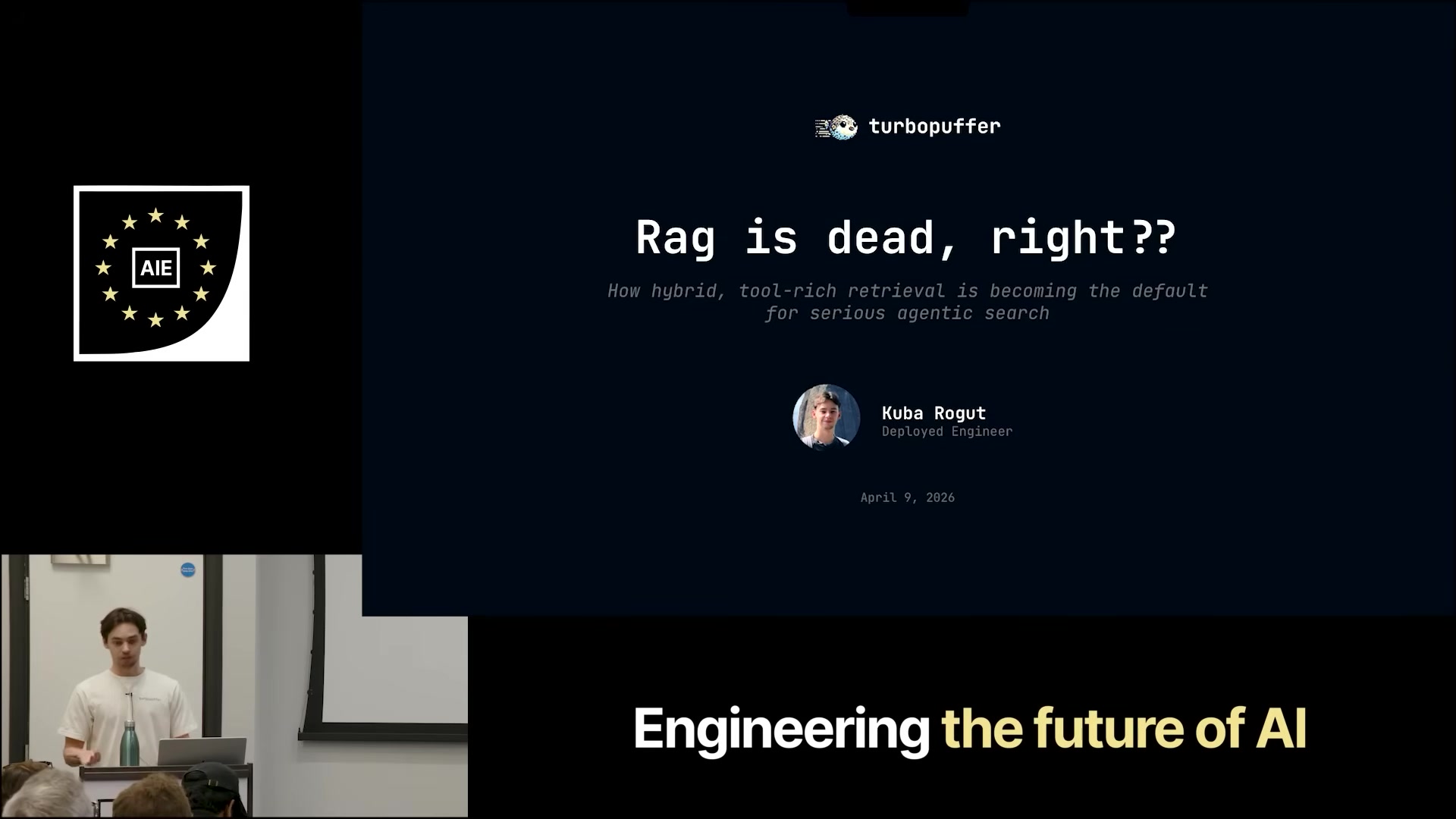
Kuba Rogut on stage opening 'RAG is dead, right?' at AI Engineer

RAG Is Dead, Right? Why Hybrid, Tool-Rich Retrieval Is the New Default for Agentic Search

Kuba Rogut, deployed engineer at Turbopuffer, gave one of the more refreshingly direct takes on the “RAG is dead” meme that’s been making the rounds on X. His argument, in one sentence: RAG isn’t dead — what’s dead is the strawman version where RAG means “embed everything once, run a single vector lookup, dump it into the LLM context.” The actual frontier is hybrid, tool-rich retrieval, where embeddings, BM25, grep, glob, regex, and filters are all tools an agent can compose iteratively....

June 13, 2026 · 4 min · AI Assistant