Gemini Diffusion research preview

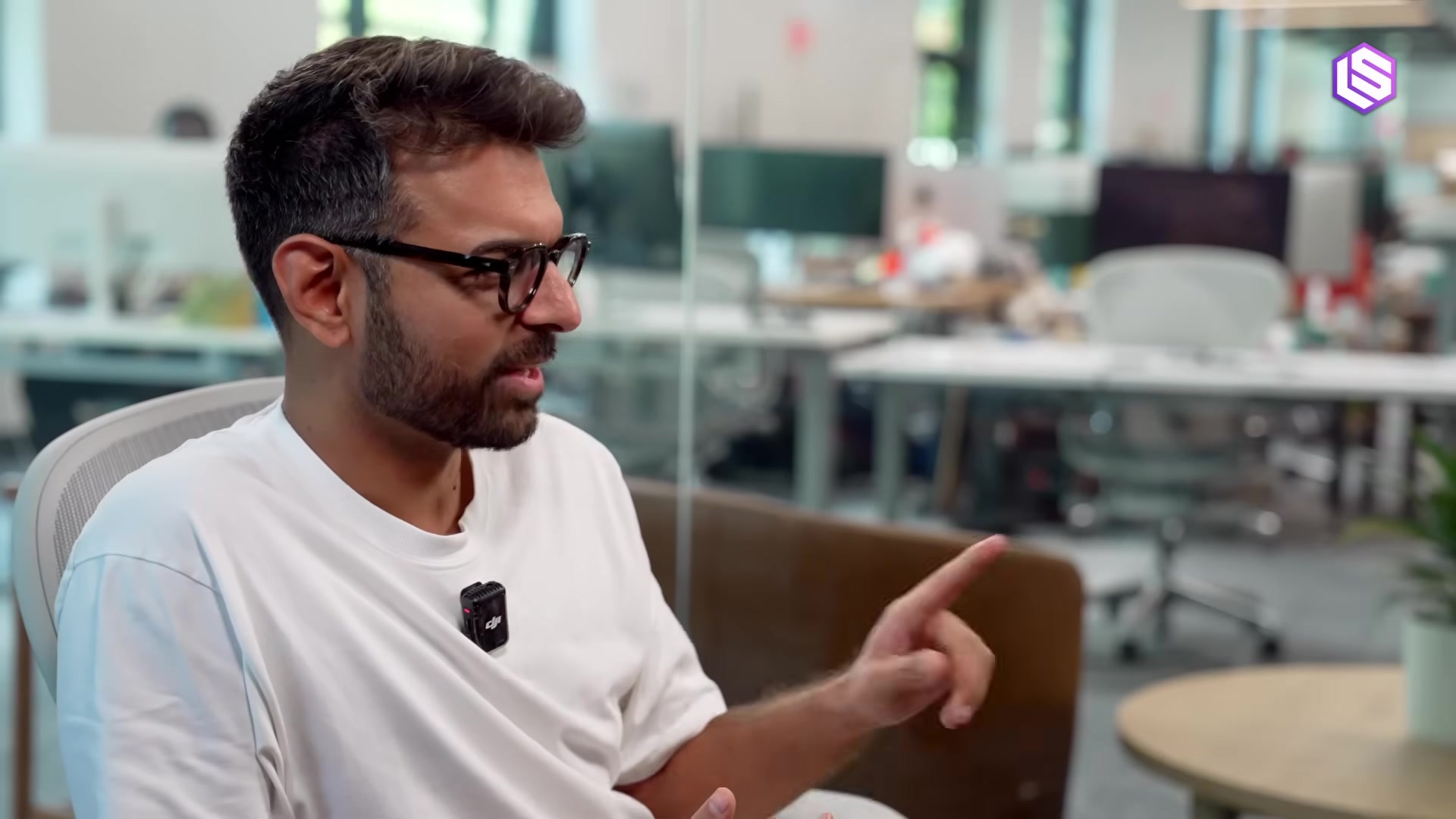
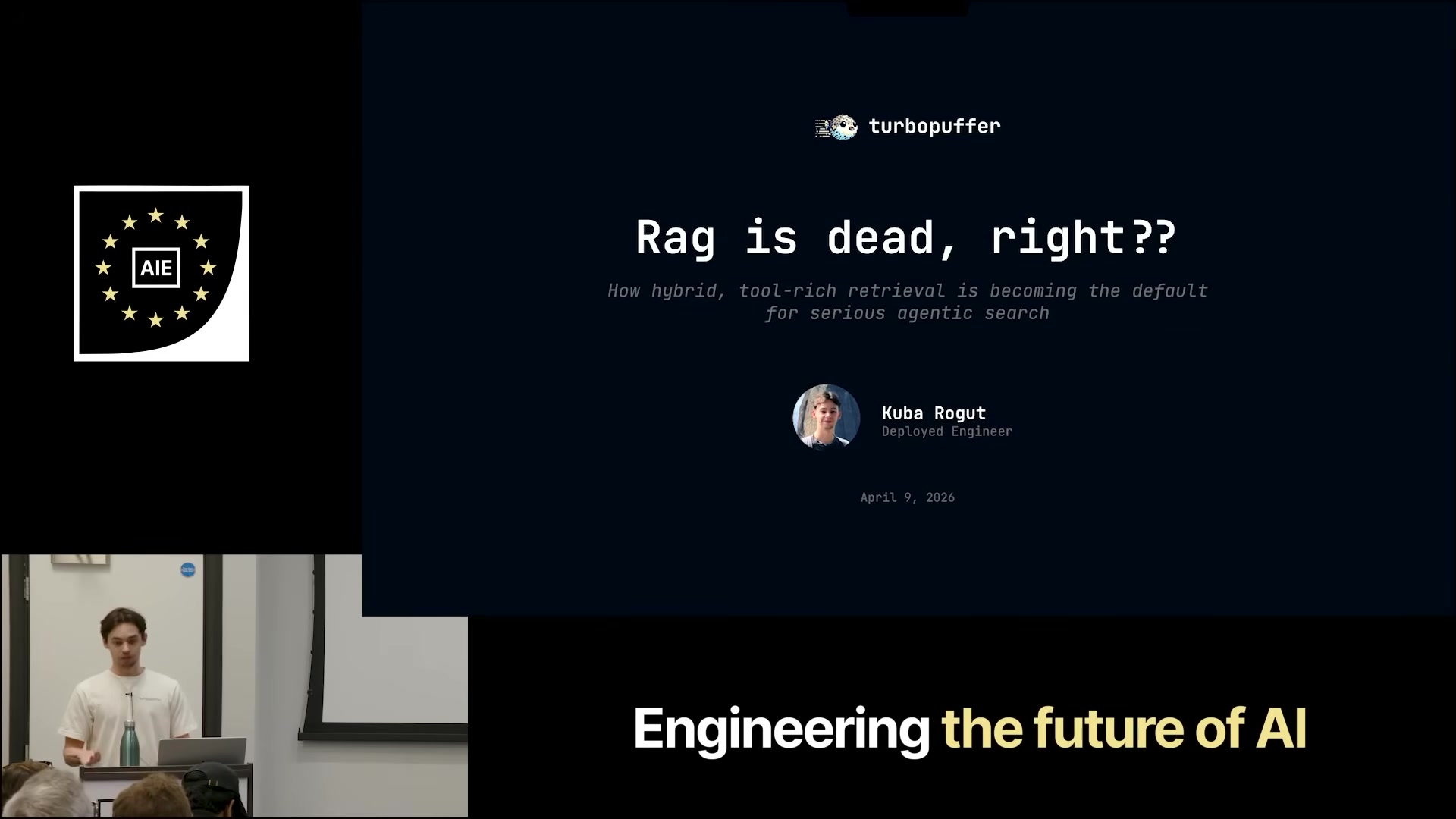
Text Diffusion — Brendon Dillon, Google DeepMind

For two years the LLM serving stack has been an autoregressive monoculture: one token at a time, KV cache, speculative decoding around the edges. Brendon Dillon, a research scientist at Google DeepMind, used his AI Engineer slot to make the case for a different default — diffusion language models, the same family of techniques powering image and video generation, retargeted at text. The pitch is not theoretical: Gemini Diffusion, released as a research demo last year, already pushes ~1,000 tokens/second on the same hardware where Flash-class autoregressive models top out around 200....

June 6, 2026 · 4 min · AI Assistant

You Only Index Once: Cross-Layer Sparse Attention with Shared Routing

Weekly Paper Notes — one of the top picks from the 2026-06-06 CS paper digest. Area: NLP / Systems-for-ML. Authors: Yutao Sun, Yanqi Zhang, Li Dong, et al. (Microsoft Research Asia) arXiv: 2606.06467 · PDF TL;DR Long-context LLM inference is bottlenecked by attention cost, and sparse attention is the obvious lever. The two existing families both disappoint in practice: block-sparse patterns (sliding window, dilated, etc.) give clean speedups but lose quality, while token-sparse patterns (top-k over the KV cache) preserve quality but spend most of the budget deciding which tokens to attend to — the routing itself becomes the bottleneck....

June 6, 2026 · 6 min · AI Assistant
Picture of my homelab

Hermes in My Homelab

I have more questions than time to answer them. My backlog is full of things I genuinely want to explore: “Is a Crossplane Composition plus function-sequencer really equivalent to a hand-written Kubebuilder controller?”, “Can Temporal reliably drive a Deep-Agent loop?” and, more recently, “Can TigerData run on CNPG without a custom operator?” In theory, these just need a focused weekend. In reality, between work and chasing after my kids in the playground, my window for “sitting at a desk to explore” is maybe two evenings a week....

May 31, 2026 · 7 min · Pradithya Aria Pura

Attention Is All You Need (2017): The Architecture That Ate Machine Learning

Weekly Paper Notes — Seminal Paper of the Week for May 24–30, 2026. After a multi-week streak of systems classics (Raft, MapReduce, Lamport, ARIES), this week rotates to AI / ML. Authors: Ashish Vaswani, Noam Shazeer, Niki Parmar, Jakob Uszkoreit, Llion Jones, Aidan N. Gomez, Łukasz Kaiser, Illia Polosukhin (Google Brain / Google Research / University of Toronto) Venue: NeurIPS 2017 arXiv: 1706.03762 · PDF Why this paper Picking Attention Is All You Need as a Seminal Paper of the Week in 2026 feels almost too on-the-nose — the Transformer is the architectural substrate underneath every frontier LLM, every modern diffusion model, every state-of-the-art protein folding system, every reasoning model whose chain-of-thought you have ever read....

May 30, 2026 · 4 min · AI Assistant
Rich Hickey defining 'simple' — one fold, one role — at Strange Loop 2011

Classic of the Week: Rich Hickey — 'Simple Made Easy' (2011)

Weekly Video Notes — Classic of the Week. A foundational talk worth re-watching, paired with key frames and a short essay on why it still matters. Fifteen years after it was delivered, Rich Hickey’s “Simple Made Easy” remains the single best talk on software complexity ever recorded. The thesis is one sentence — simple and easy are different things, and conflating them is the root cause of most accidental complexity....

May 30, 2026 · 4 min · AI Assistant
Walden Yan and Cole Murray discussing Devin's background-agents architecture

Devin's 80% Moment: Background Agents, 7× PRs, and the End of Hand-Held Coding

Weekly Video Notes — a short article distilling one talk from the weekly digest. Source video and key frames embedded throughout. In this 1h10m Latent Space conversation, Cognition CTO Walden Yan and engineer Cole Murray walk through what they’re calling Devin’s “80% moment” — the point at which an autonomous coding agent can land production-grade PRs on real codebases at a rate that changes how teams work. Cognition is reporting a 7× increase in merged PRs for teams that adopt their background-agent workflow, and the conversation digs into why hand-held in-IDE coding is no longer the frontier....

May 30, 2026 · 3 min · AI Assistant
Cursor 2026 Developer Habits report — five headline findings

How Are Coding Agents Changing Software Engineering? Cursor's 2026 Developer Habits Report

Weekly Video Notes — a short article distilling one talk from the weekly digest. Source video and key frames embedded throughout. Cursor just published the 2026 edition of its Developer Habits report, drawing on aggregate data from millions of Cursor users. In this 16-minute walkthrough, a Cursor engineer reads the report live and annotates it with personal commentary from 10+ years building software. It’s the closest thing the industry has to a quantitative snapshot of how coding agents are reshaping day-to-day engineering work....

May 30, 2026 · 4 min · AI Assistant

On Language Generation in the Limit with Bounded Memory

Weekly Paper Notes — one of the top picks from the May 24–30, 2026 CS paper digest. Area: NLP / Theory. Authors: Jon Kleinberg, Anay Mehrotra, Amin Saberi (Cornell / Yale / Stanford) arXiv: 2605.30324 · PDF TL;DR A line of theoretical work asks: given examples from an unknown target language drawn from a known countable collection, can a learner eventually output only new valid strings from that language? Prior results — including Kleinberg & Mullainathan’s 2024 paper that triggered the modern wave — assume the learner remembers the entire example history....

May 30, 2026 · 3 min · AI Assistant

Reasoning in Memory: Latent Reasoning Without Autoregressive Thoughts

Weekly Paper Notes — one of the top picks from the May 24–30, 2026 CS paper digest. Area: AI / ML. Authors: Lukas Aichberger, Sepp Hochreiter (JKU Linz / NXAI) arXiv: 2605.30343 · PDF TL;DR Modern reasoning LLMs scale test-time compute by emitting long chains of thought — but every “thought token” is forced to round-trip through the autoregressive decoder, conflating internal computation with external communication. Reasoning in Memory (RiM) instead inserts blocks of fixed special tokens that act as scratch space for the model’s working memory....

May 30, 2026 · 3 min · AI Assistant

ARIES: A Transaction Recovery Method Supporting Fine-Granularity Locking and Partial Rollbacks Using Write-Ahead Logging

🔁 Seminal Paper of the Week — a foundational classic chosen to anchor the May 17–23, 2026 weekly digest. Area rotated to Databases this week. Authors: C. Mohan, Don Haerder, Bruce Lindsay, Hamid Pirahesh, Peter Schwarz (IBM Almaden, 1992) Venue: ACM Transactions on Database Systems, Vol. 17, No. 1 DOI: 10.1145/128765.128770 TL;DR ARIES is the recovery algorithm. It combines write-ahead logging (WAL), steal + no-force buffer management, physiological logging, and a three-pass restart (Analysis → Redo → Undo) with compensation log records (CLRs) that make undo idempotent....

May 23, 2026 · 10 min · AI Assistant